




Reviewed by TyLean Tuijl
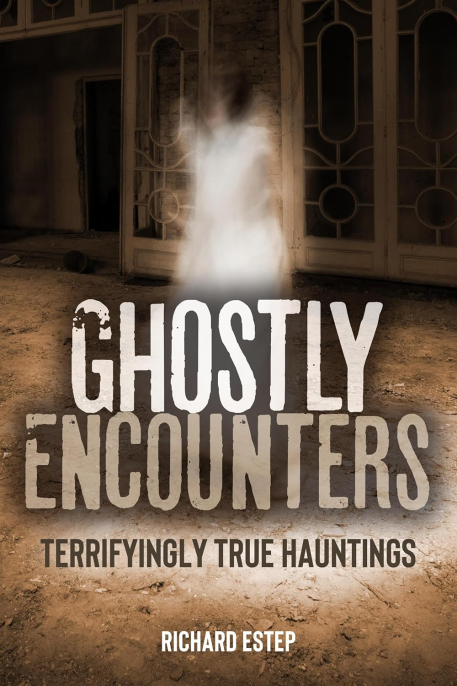
Dark tourism is the only tourism as far as I’m concerned. If there is a cemetery, a ghost tour or something macabre, it’s likely to be the highlight of my travels if not the reason for my travels. Richard Estep is perhaps even more ambitious than I am when it comes to tracking down ghostly, haunted and morbid stories and sites, having written many books on these subjects, regularly contributing to Haunted Magazine and appearing on several ghost-hunting genre television shows. I approached this book as storytelling entertainment and a possible means to resupply my dwindling bucket list of haunted, morbid and twisted destinations with high hopes that I would learn about something completely new to take my fancy.
The introduction is promising and sets the book up to be told in engrossing ghost story fashion. Unfortunately, this tone isn’t maintained throughout the whole book as some chapters are written more from a sceptical paranormal investigator’s standpoint than from a lover of the haunted stories. For example, The Curse of the Lemps starts off well with the history of multiple family members of the prestigious Lemp family committing suicide, but by the end of the chapter, it devolves into a more paranormal investigation style of writing. In addition, the paranormal activity mentioned surrounding the tragic Lemp family history relies too heavily on television shows, which are not reliable sources. The chapter ends with the author’s own tale of a discarnate baby crying as they leave the hotel, which is a nice narrative touch.
Gef, the talking mongoose, and the Philip experiment revert to a paranormal investigator’s tone, although they are enjoyable and interesting chapters. However, it is in the chapter To the Last Breath that the book really finds its stride as Estep tells stories of the Waverly Hills Sanatorium. Perhaps because of Estep’s background as a paramedic, the storytelling in this chapter is especially enthralling despite the compulsion to mention current events which will unfavourably date the book in the future.
The Enfield poltergeist follows, which is covered well enough considering only one chapter is dedicated to the story. The Town Too Tough to Die explores the haunted history of Tombstone, Arizona, including Estep’s personal encounter at Brunckow’s Cabin. Chapters on the Black Monk, the Bell Witch, and the Borley Rectory follow but the flow of the book begins to slump at this point.
The R101 Airship and Eastern Airlines Flight 401 are among the highlights of the book and display the perfect balance between ghostly storytelling and paranormal investigation. Combined with the penultimate chapter, Haunted High Seas, these three chapters could have been the start of a book on haunted vessels or hauntings having to do with vessel disasters, which I – personally – would have found highly enjoyable.
I am familiar with most of the stories covered in this book, but Eastern State Penitentiary is a subject I am very knowledgeable about. As a former member of Eastern State Penitentiary, I have visited the prison many times, and I used to submit a yearly art installation proposal (which I was never awarded, but one proposal did make it to committee), for which I have spent many hours studying the prison cells and prison stories in preparation to design relevant installations. The storytelling material of Eastern State is seemingly endless, but the chapter focuses on Al Capone and Pep the incarcerated dog. This chapter was a missed opportunity in my opinion. Estep also makes a claim that the prison is trying to distance itself from the haunted history, but this could not be further from the truth. The prison capitalises on the haunted history and heavily relies on the proceeds from the yearly haunted attraction, Terror Behind the Walls, which is ranked among the best haunted attractions in the entire country.
Shepton Mallet Prison appropriately follows the Eastern State Penitentiary chapter and presents a fascinating history. The book then moves on to Gettysburg Battlefield, a chapter that could be terribly redundant given the saturated market on Gettysburg ghost stories, but it comes across as both fresh and interesting. The next three chapters cover the Stanley House, the Sallie House and Alcatraz Island. However, Alcatraz Island should perhaps have sat between Eastern State Penitentiary and Shepton Mallet Prison instead.
The penultimate chapter, Haunted High Seas, is among my favourite in the book, and not just because I’m a boat enthusiast. Estep once again manages to strike the perfect balance between storytelling and paranormal inquiry. The Epilogue: Haunted Hostelries ends with stories about the Jamaica Inn and the Skirrid Inn which feel like honourable mentions.
I’m a harsh critic, so Ghostly Encounters: Terrifyingly True Hauntings coming to my hands is perhaps unfortunate for Estep. Having stated what I hoped to get out of the book at the start of this review, did the book satisfy those hopes? No, it didn’t, but it never promised to either. I am probably not the target audience for this book, and yet it was still an enjoyable read, even when I was familiar with the stories that were being covered. My chief criticism of this book is that it reads like a catalogue to Estep’s many other books that cover these subjects in more detail, which is perhaps why the tone seems to vary from investigator to storyteller from chapter to chapter. I would also like to see a reorganisation of the chapters, clumping them together in themed parts, so the prisons are together, the vessels, etc. I think this book is best suited to someone new to paranormal investigation or true ghost stories. For the more experienced, Estep’s extensive back catalogue that dives deeper into the subject matter is probably a better starting place, and there is sure to be something that takes your fancy.